
PRESS
Read DM Development's latest news and press releases
‘Trailblazer’ affordable apartment complex breaks ground
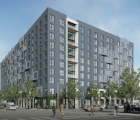
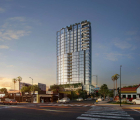
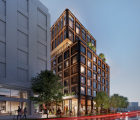
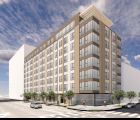
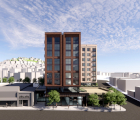
Construction work is officially underway on a long-awaited 11-story affordable-housing development in Potrero Hill that is considered an early application of a landmark California law intended to streamline housing production.
But even with the assist from the streamlining measure — known as Senate Bill 35 — the 425-unit project at 300 De Haro St. has faced major delays that resulted from the economic disruptions unleashed by the COVID-19 pandemic.
All the same, during a Monday-morning groundbreaking ceremony, speakers hailed the team behind the project as pioneers in California housing law.
“It took a long time, but we took a lot from this project,” said Corey Smith, executive director of the Housing Action Coalition, which advocates for San Francisco homebuilders. “We learned a lot.”
Hundreds of housing projects — accounting for thousands of units, including many in San Francisco — have applied for permits under SB 35’s streamlined process since the measure took effect in 2018. For qualifying projects, the law clears away certain forms of review that can lead to years-long delays.
In the case of 300 De Haro, lead project developer DM Development managed in 2021 to gain permits for the proposed apartment building over a span of just six months thanks to SB 35, according to Mark MacDonald, the San Francisco-based company’s CEO.

Without the streamlined process, “it would have taken years, decades, maybe never,” he said.
“This project would not have been entitled by now,” he said. “I can almost guarantee you that.”
Despite the speedy permitting timeline, the apartment building has faced years of delays as a result of financing challenges brought on by the pandemic. The outbreak of the disease and the restrictions that followed set off a cascade of economic upheavals that resulted in sky-high interest rates and a slowdown in lending that together have made housing extremely difficult to finance.
With little hope of gaining financing on the private market, the project’s backers pivoted away from their original plan for the property. Instead of a mixed development with both market-rate and affordable apartments, the building is now moving forward as a 100% affordable development with the help of federal funding programs that assist such projects.
Over the next year or so, backers say the $200 million project will transform the triangle-shaped plot of land at the intersection of 16th and De Haro streets into one of the largest affordable-housing developments to be completed in San Francisco since the start of the pandemic.